

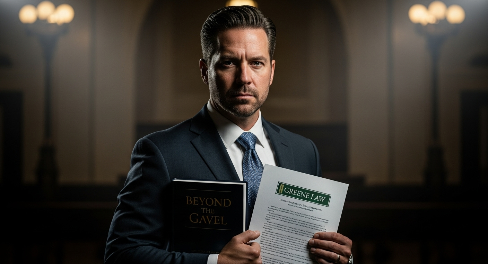
Beyond the Gavel: The Unseen Fight of Justin Billingsley Greene Law
We’ve all seen it. The slick television drama where a charismatic lawyer in a thousand-dollar suit delivers a show-stopping closing argument. A single, brilliant question breaks a witness on the stand. The gavel slams down, justice is served, and the credits roll. It’s dramatic, it’s clean, and it has almost nothing to do with how justice is actually won for most people. The real fight for the injured and the disabled isn’t waged under the bright lights of a courtroom. It’s fought in the quiet, fluorescent-lit world of paperwork, phone calls, and bureaucratic mazes. It’s a war of attrition, not of theatrics. This is the world where a local, client-focused practice like Justin Billingsley Greene Law truly demonstrates its power. Their secret weapon isn’t a silver tongue; it’s the methodical, unyielding persistence required to force massive, impersonal systems to do the right thing.
Justin Billingsley Greene Law This article pulls back the curtain on that fight. We’ll explore the myth of the courtroom warrior, delve into the three primary fronts where these battles are waged, and reveal why the skills of a strategist and project manager are often more valuable than those of an orator. This is the story of the unseen, unglamorous, and absolutely essential work that defines modern legal advocacy for the individual.
The Goliath You Don’t See: Fighting Bureaucracy, Not Just Opposing Counsel
When you’re injured in a car wreck or on the job, your opponent isn’t just the person or company at fault. Your real adversary is often their insurance carrier—a multi-billion-dollar entity with entire departments dedicated to minimizing payouts. When you can no longer work and need disability benefits, you’re not debating a single person; you’re petitioning the vast United States Social Security Administration (SSA).
These are not opponents you can outsmart with a clever legal trick. They are Goliaths of process and policy, designed to wear you down. Their strength lies in their complexity, their endless requests for documentation, and their ability to wait you out. They know that a delayed claim is a denied claim in spirit, and that many people will simply give up out of exhaustion and frustration.
This is where the paradigm of the “fighter lawyer” needs a complete rethink.
I once followed the case of a forklift operator from the Upstate of South Carolina. He suffered a debilitating back injury on the job, the kind that slowly robs you of your ability to stand, to lift, to even sit without pain. The company’s insurance carrier made an initial offer that was, frankly, an insult. It barely covered the cost of his first few physical therapy sessions, let alone the potential for future surgeries or a lifetime of lost wages.
For the next year, his legal team waged a silent war. I didn’t see a single dramatic courtroom showdown. What I saw was a lawyer acting as a relentless project manager.
- Meticulous Documentation: They gathered every single medical record, every doctor’s note, every prescription receipt.
- Expert Depositions: They spent hours deposing medical experts, not for a jury, but to create an ironclad record of the injury’s long-term impact on the lumbar spine.
- Strategic Challenges: They consistently and professionally challenged the findings of the insurer’s “independent” medical examiner, pointing out logical flaws and contradictions with objective evidence like MRI scans.
The turning point wasn’t a “gotcha” moment. It was a thick, meticulously organized demand letter sent to the insurance adjuster. It was so thorough, so irrefutably documented, that it laid out the exact cost of a potential trial for the insurer—and the high probability they would lose. The insurer, a faceless entity driven by financial risk assessment, folded. They settled for an amount that secured the man’s financial future.
That experience taught me a fundamental truth: in this arena, the most powerful weapon is a well-documented file folder. The victory was won through patience, preparation, and an intimate understanding of the bureaucratic battlefield.
The Three Arenas of Attrition: Personal Injury, Workers’ Comp, and Social Security
Firms like Justin B. Greene’s operate on three distinct but related fronts. Each has its own set of rules, its own bureaucratic quirks, and its own unique ways of denying legitimate claims. Success in one doesn’t guarantee success in another, but the underlying principle of strategic preparation is universal.
The Personal Injury Claim: A Battle of Documentation
In South Carolina, the need for skilled personal injury representation is a daily reality. The state’s Department of Public Safety reported in its 2022 Fact Book that a traffic collision occurred every 4.4 minutes. Someone was injured in one of those wrecks every 13.5 minutes.
Behind each of those statistics is a person whose life has been disrupted. They face medical bills, lost time from work, and the daunting task of dealing with an auto insurance adjuster whose primary job is to protect the company’s bottom line.
The lawyer’s role here is to build a fortress of evidence before a lawsuit is even filed. This involves:
- Gathering Evidence: Securing the official police report, interviewing witnesses, and obtaining traffic camera footage if available.
- Documenting Damages: Compiling all medical bills, tracking lost wages, and working with medical experts to project the cost of future care. This is a critical step many people overlook. An injury’s cost isn’t just the bills you have today; it’s the physical therapy you’ll need next year and the potential surgery five years from now.
- Negotiating from Strength: An experienced attorney presents this comprehensive package to the adjuster. The message is clear: “Here is our evidence. It is thorough and compelling. You can offer a fair settlement now, or we can present this same evidence to a jury later.” More often than not, a well-prepared case results in a fair settlement without ever seeing the inside of a courtroom.
The Workers’ Compensation Maze: Navigating a System Built for Employers
The U.S. Bureau of Labor Statistics found there were 2.8 million nonfatal workplace injuries and illnesses in the private sector in 2022. The workers’ compensation system was designed to provide a no-fault remedy for these employees, but it has become a complex maze that can feel stacked against the injured worker.
Insurers often deny claims for a variety of reasons:
- Alleging the injury wasn’t work-related.
- Claiming it was a pre-existing condition.
- Disputing the severity of the injury based on their own doctor’s opinion.
An attorney specializing in this area acts as a guide and an advocate. They ensure the proper forms are filed on time, challenge unfair medical opinions, and represent the worker before the state’s Workers’ Compensation Commission. They fight to get the medical treatment and wage replacement benefits the law promises, pushing back against the systemic inertia that favors the employer’s insurer.
The Social Security Disability Appeal: Overcoming the Initial “No”
Perhaps the most daunting bureaucratic battle is the one for Social Security Disability Insurance (SSDI) or Supplemental Security Income (SSI). The system is overwhelmed, and the initial review process is brutal. According to the Social Security Administration’s own 2022 statistics, only about 35% of initial disability applications were approved.
That means nearly two-thirds of applicants, many with legitimate and severe disabilities, are denied and forced into a lengthy appeals process. This is where legal help becomes indispensable. A denial is often not a judgment on the disability itself but a failure to meet the SSA’s strict evidentiary requirements.
A lawyer’s job in an SSDI appeal is to rebuild the case from the ground up for a hearing before an Administrative Law Judge (ALJ). This involves:
- Analyzing the SSA’s denial letter to understand exactly why they said “no.”
- Working with the client’s doctors to get detailed medical source statements that speak the SSA’s language.
- Submitting a comprehensive legal brief to the judge before the hearing.
- Preparing the client to testify clearly about how their disability limits their daily functional capacity.
Winning a disability case is rarely about a single piece of evidence. It’s about presenting a cohesive narrative, supported by hundreds of pages of medical records, that paints an undeniable picture of a person’s inability to work.
More Than a Lawyer: The Strategist Behind the Claim
The skills required to win these battles go far beyond a law degree. A successful attorney in this field must be a master strategist, an empathetic communicator, and a meticulous project manager. They must possess a deep well of patience and an unwavering attention to detail.
Think about the sheer volume of information involved in a single complex case: years of medical history, financial records, witness accounts, and dense regulatory codes. The lawyer’s job is to synthesize all of this into a clear, logical, and persuasive argument. They are the architect of the case, building it brick by brick, document by document.
This strategic approach is the core of what firms like Justin Billingsley Greene Law provide. They understand that victory is the product of a process. It’s about knowing which piece of evidence is needed when, how to frame a request to a doctor to get the most useful response, and when to push an adjuster versus when to provide more information. It’s a calculated, long-term game, and they play it on behalf of people who lack the resources, energy, or specialized knowledge to play it for themselves.
Why a Local Advocate Like Justin Greene Makes the Difference
In a world of giant national firms and anonymous call centers, the value of a local, dedicated advocate cannot be overstated. A lawyer rooted in the community, like Justin Greene in Easley, offers advantages that go beyond legal knowledge.
- Local Knowledge: They understand the local court system, the leanings of the administrative law judges, and the reputations of the region’s medical experts.
- Personal Investment: They aren’t just handling a case file; they’re helping a neighbor. Their reputation is built on the results they get for people in their community.
- Accessibility: You can meet with them face-to-face. You are a person with a name and a story, not just a case number in a database.
This local connection embodies the spirit of what the civil justice system is supposed to be about. As Navan Ward, Jr., a past President of the American Association for Justice, powerfully stated:
“We fight for our clients every single day, often against the largest corporations and insurance companies in the world. We are the key to the courthouse doors for many.”
A local firm like Greene Law isn’t just a key to the courthouse; it’s the key to navigating the entire labyrinthine system that stands between a person and the benefits they deserve.
Conclusion: The Quiet War for Justice
The next time you see a personal injury ad on television, look past the dramatic reenactments and bold promises. Remember the quiet, methodical work that truly defines this area of law. Justice for the injured isn’t forged in the fire of a courtroom cross-examination; it’s painstakingly assembled in the calm of a law office, piece by piece, document by document.
The true power of a firm like Justin Billingsley Greene Law lies in its mastery of this unseen battle. They are strategists, guides, and steadfast advocates who understand that the most effective way to fight a bureaucratic Goliath is not with a shout, but with an ironclad case built on a foundation of irrefutable fact. It’s a quiet war, but for the clients whose lives hang in the balance, it is the only war that matters.
If this article gave you a new perspective on the legal process, please share it with someone who might benefit. And if you have experiences navigating these systems, we’d value hearing your story in the comments below.
Frequently Asked Questions (Justin Billingsley Greene Law)
1. Do all personal injury cases actually go to court?
Absolutely not. In fact, the vast majority—well over 90%—of personal injury cases are settled before they ever reach a trial. The primary goal of a skilled attorney is to build a case so strong and well-documented that the insurance company knows it would likely lose at trial. This leverage forces them to offer a fair settlement, saving everyone the time, expense, and stress of a court battle.
2. Why do so many Social Security Disability claims get denied at first?
There are two main reasons. First, the Social Security Administration has a very strict and technical definition of “disability,” and many initial applications simply lack the specific medical evidence needed to meet it. Second, the sheer volume of claims means reviewers spend limited time on each file. An incomplete form, a missing medical record, or a doctor’s note that isn’t detailed enough can easily lead to a denial, forcing the applicant into the appeals process where their case can be developed more thoroughly.
3. What’s the real difference between a workers’ comp claim and a personal injury lawsuit?
Workers’ compensation is a “no-fault” system. You generally don’t have to prove your employer was negligent, only that you were injured while performing your job duties. In exchange, the benefits are typically limited to medical expenses and a percentage of lost wages. A personal injury lawsuit requires you to prove that someone else’s negligence caused your injury, but you can sue for a wider range of damages, including pain and suffering. They are distinct legal processes governed by different rules.
4. How can a lawyer help if the insurance company has already made an offer?
An initial offer from an insurance company is almost always lower than the actual value of the claim. They are testing you to see if you’ll accept a quick, low payout. A lawyer can properly evaluate your case by calculating all your damages—including future medical needs, long-term lost income, and pain and suffering. They then use this comprehensive valuation to negotiate with the insurer from a position of strength, often resulting in a settlement that is many times higher than the initial offer.
5. Is a local lawyer in South Carolina really better for my case?
While a good lawyer anywhere is valuable, a local lawyer provides distinct advantages. They are familiar with the local court procedures, the administrative law judges in your area, and the network of local medical experts whose opinions carry weight. This familiarity can be a significant strategic asset. Furthermore, a local firm is part of your community, providing a level of personal service and accountability that larger, out-of-state firms often can’t match.




rfwqyq
1i91tu
6wxzxt
5s3895
I like what you guys are up too. Such smart work and reporting! Carry on the excellent works guys I have incorporated you guys to my blogroll. I think it will improve the value of my website :).
Hello.This article was really motivating, especially because I was investigating for thoughts on this issue last Friday.